The role of pension funds in financing the future of cleantech

We hope you didn’t miss our interview with Anders Stromblad this summer, where we discussed the crucial role pension funds can play in financing the future of cleantech. If you missed it in our Q2 Quarterly Briefing, we’re sharing it again here!

Some takeaways:

– Long Time Horizons ⏳🌿 Cleantech stands out as an investment area by often being very capital intensive and consisting of long time horizons. Extending investment periods and prioritizing long-term returns over short-term gains may be essential for climate-focused investments

– Sustainable Investment Performance 💰💼 AP2’s portfolio shows promising performance in sustainable investments. Their sustainable infrastructure portfolio, which includes funds like Copenhagen Infrastructure Partners, Generate Capital, Pattern Energy, Sandbrook, and Climate Finance Partnership, has averaged a 13% return since 2020. Their private equity portfolio, featuring climate-focused funds like Breakthrough Energy Ventures, Khosla Ventures, TPG Rise Climate, Generation Just Climate and DCVC, has also performed well, often outperforming the listed stock market. While returns have varied, it’s promising to see such positive outcomes in the cleantech space.

– U.S. Outperforms Europe 🌎🏆 Most investments remain U.S.-centric due to the larger availability of venture capital and the relative ease of scaling companies in the U.S. compared to Europe, where legal and market conditions vary widely between countries. Therefore, improving the European investment landscape is crucial for attracting pension funds and other institutional investors to Nordic cleantech companies.

The role of pension funds in financing the future of cleantech2026-01-02T22:10:46+01:00

The Flexibility Makers

“The biggest challenge to transition to a zero-carbon world is not the total amount of clean energy available, it is to make sure there is clean electricity available at all times, 24/7 – all days of the year”. Patrik Möller, Cor Power Ocean

We have previously written about the exceptionally strong growth sector we are seeing within electrification in the Nordics in general and in Sweden in particular, with companies such as autonomous truck maker Einride, electric bike maker Cake and electric boat makers Candela and X-shore, to mention only the tip of the iceberg. Now we want to highlight a group of technologies quickly emerging out of the Nordics that are of crucial importance to understand for anyone involved with our energy system in one way or the other – the technologies making sure your tea kettle keeps boiling even as everyone else is putting theirs on, the one that can bring the price of charging your EV down, the true heroes of our electricity cables – The Flexibility Makers.

These companies are providing flexibility to the grid in one way or the other, by counteracting the variability of energy production which tends to be higher in renewables such as wind and solar. They are typically underseen in relation to their potential impact on our society and in the long run our ecosystem. Allow us to introduce you to the companies enabling an electricity grid with an abundance of renewable electricity.

Power plants that add flexibility without adding CO2 to the atmosphere

C-Green uses a process called hydrothermal carbonization, which in more simple terms is the treatment of wet or dry organic matter at elevated temperatures in oxygen-free conditions. C-Green has managed to turn this into a robust industrial process that can transform a variety of different biomass, such as the wet sludge left overs from waste water treatment plants, into Hydrochar, a solid, high energy density fuel with properties similar to coal. However, with the distinct advantage to coal, oil and natural gas, that it is produced from renewable biomass sources, meaning a much lower carbon footprint. It is ideal for use in biofuel and waste incinerator power plants, and yep you might have already guessed it, one of the main advantages of these plants are that they can typically provide both base-load and highly flexible peak-load power.

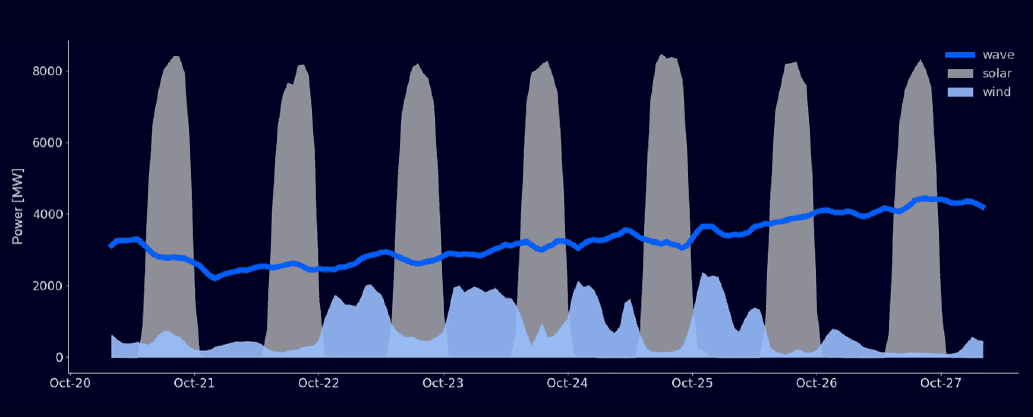
Wave power has an energy generation profile that complements solar and wind

Waves are fetched over long distances, over multiple days from various weather systems, giving wave power a very consistent power flow at any time of the day and any time of the year, independent on local weather conditions, making it an excellent complement to stabilize the clean energy mix.

Wave power has been long in the making but with recent development the technology seems to be finally coming out of testing and into the real world. CorPower Ocean converts the mechanical energy of the waves into electrical energy for utility-scale energy generation. The solution is inspired by the pumping principles of the human heart. Advanced control technology forces the wave energy converters to oscillate in optimal timing with incoming waves, strongly amplifying energy absorption and power output. Size, weight and cost ratios of the plants therefore becomes much more beneficial. Harnessing electricity from waves on open waters has proven notoriously difficult due to the harsh conditions and costs associated with it, but in the same way the technology of CorPower Ocean can amplify the wave energy, it can also be used to dampen the effect of storm waves. CorPower Ocean has been testing and proving the technology over a long time and are just about to put their first full scale version into the Atlantic Ocean outside of Portugal.

(Very) distributed power production

Distributed power production has taken a huge leap forward with the accelerating roll-out of rooftop solar. Something that has proven to be sometimes more scalable compared to building traditional centralized power production. Now some companies have even taken this one step further.

Exeger is in full swing already producing Powerfoyle, a customizable, thin, bendable solar cell that integrates into products such as headphones. I am writing this with my own pair of Urbanista Bluetooth headphones lying on the desk in front of me. They are charged and powered by the integrated solar cell that doesn’t even look like a solar cell, and I have not had to charge them once since I bought them a year ago.

Epishine has created a similarly thin, flexible and portable organic solar cell that can be used for harvesting energy for indoor applications. It is manufactured through a printing process and requires significantly less materials than typical solar cells used today.

These solutions have a positive impact on our ecosystems from reducing the battery need. Removing the need for charging products increases comfort and lowers maintenance cost making them suitable to be integrated into many more products. Removing small appliance charging from the grid won´t create any large impact on the grid in the near future but give this technology some years to scale and ride the cost curve and we might see these solar cells on surfaces we have not yet even been thinking of. Maybe we won´t even see an EVs without integrated solar being sold, and then we’ll start to see a big impact on easing the burden on the grid.

Baseload Capital focus on enabling “the nuclear of renewables”

Not the one with harmful waste and the risk of catastrophic radiation leakage, but the one that is naturally created within the core of our planet. Geothermic heat power is a form of renewable energy that can be harnessed from pre-existing heat sources. This includes not only geothermal heat but also industrial waste heat. Unlike wind and solar power, heat power can provide a constant stream of electricity, regardless of the weather or the time of day, also known as baseload power, which is today mostly produced using nuclear energy, or fossil fuels, mainly in the form of coal. Swedish company Baseload Capital is focusing on investing in these types of projects by forming power companies to develop and operate geothermal power plants in Iceland, Taiwan, Japan and the U.S.

Emission free heat and steam from electricity surplus hours

Generating steam or hot water is a common use of energy in the industrial sector, particularly in industries such as food processing, chemical production, and paper manufacturing. The need for heated steam or water is however strongly tied to the production intensity, causing energy prices to rise at those time of the day when most production occur as well as requiring a high flexibility in choosing when and how much steam or hot water to produce.

Elstor instead utilizes the electricity market’s cheapest hours, when electricity demand is low, and stores this electricity as thermal energy. The stored energy is then used to produce heat and steam when it’s needed during peak hours. Operating costs are stated to be lower than creating this type of flexibility with fossil fuels and the grid is utilized more efficiently during low demand hours. Steam is critical in industrial processes such as food production, where it is used for things such as heating cooking pots, heat treatment and sterilization. Food company Herkkumaa has been a pioneering customer who replaced their current system for steam and heat production, which used approximately 264,000 litres of light fuel oil per year, with an Elstor system fueled by fossil free electricity. This made their process emission-free and reduced the carbon footprint of Herkkumaa’s production to zero (the emissions created by the manufacturing of the Elstor system were compensated for in only half a year).

Batteries, Batteries and even more Batteries

Batteries for large scale energy storage is the obvious way to provide demand flexibility and decrease pressure on the grid and get the most out of renewable energy installations. Swedish fast growing solar company Alight recently installed 2 MW of storage alongside a recent solar park and have stated they see battery storage becoming a natural part of solar power parks being built in the future, adding both emission free electricity and being able to provide some grid power flexibility at the same time.

Swedish Northvolt is the undisputed heavyweight champion of Nordic battery factory development, and that is astonishing considering that the company didn’t exist 10 years ago. Their target for annual cell output by 2030 is 150 GWh, and when considering the current carbon impact of batteries, Northvolt predicts that the production of these cells will emit 80% less CO2 compared to cells made using coal power. At that point 50% of the raw material that goes into their cells will come from old batteries recycled by Northvolt themselves…

In similar fashion, Norwegian Morrow is leveraging low emission battery production through the abundant Norwegian renewable hydropower electricity and aim to develop and manufacture the world’s most sustainable batteries in their Giga factory being built in the south of Norway, using Lithium-Sulphur technology.

Equally important, a bunch of Nordic companies are developing different anode and cathode materials to improve economy, performance and price of batteries.

Cenate is a Norwegian company developing and producing silicon-containing anode materials with nano technology to be directly used in today´s lithium-ion batteries. This is a new anode material for Lithium batteries that will make it possible for battery producers to both lower battery cost and increase energy storage density.

Swedish Altris has developed a new way of producing a sodium-ion cathode material – with the potential of eliminating the use of rare, poisonous, or hard to find raw materials and replacing them with abundant and recyclable natural materials such as iron and sodium (available in sea-salt).

Zinc-ion batteries are not yet being commercialized in scale but come with great promise as they are potentially safer, longer lasting and significantly cheaper than lithium-ion batteries. Current global Zinc production is 130x higher compared to the production of Lithium. Swedish Enerpoly is developing batteries using zinc metal as anode and manganese dioxide as cathode with a water-based electrolyte. These batteries lend themselves particularly well for grid flexibility applications, shifting energy load from peak to off-peak hours, due to their charging and discharging properties.

Ligna Energy is taking a totally different route developing batteries from forest materials, making use of lignin taken from the forest industry waste stream. They use a water-based electrolyte and organic polymers. Their first product, batteries for IoT devices, is already on the market and as only natural materials are used in the design the batteries can be disposed of and incinerated without any CO2 impact.

The local market in the Nordics is clearly benefitting from each other. Both through complementing competences but also through co-operations along the value chains. Swedish fast growing energy storage company Polarium, specializing in supplying battery storage to the Telco industry, have initiated a long-term partnership with Northvolt who will supply Polarium with lithium-ion battery cells, replacing a lot of the diesel generators still in use for backup power in telecom installations all around the world.

Energy – a service that includes the battery?

Finnish Cactos has built their business idea on the fact that businesses only need their electricity during working hours. Their battery Cactos One automatically charges when electricity is cheap and provide the cheap electricity when the businesses need it most during the expensive hours, lowering the electricity bills whilst stabilizing the national electricity grid at the same time.

Ferroamp sell microgrids based on a DC power backbone. This decreases costs and minimizes conversion losses between solar panels, storage batteries and EV charging.

The EnergyHub from Ferroamp connects solar cells and batteries in a DC grid instead of using the normal 230V grid AC lines. The system is modular and can be used in a house just as well as an apartment block or corporate setting, meaning that multiple buildings can cost-efficiently share energy, storage and power resources. Why DC you might ask? Well, since solar, battery and EVs already uses DC power natively it is more efficient to move the power between these devices directly by using a DC grid instead of having huge losses by being forced to go back and forth between AC and DC several times.

Software and connectivity creating flexibility from existing power use

We haven´t even touched upon solutions to add flexibility by controlling and optimizing the demand side. Tibber is a Swedish company offering energy efficiency services and energy insights. Through their systems its possible to adapt your energy use and lower consumption during peak hours. Some things are even managed automatically by Tibbers system, such as adaptive EV charging where the system can make sure you only charge your car during cheap off-peak hours. Several EV charging companies such as Danish Monta, Swedish Chargeamps and Finnish Virta provide cloud-based charging platforms capable of moving EV charging load from peak hours to low price and low demand hours.

Similar software-based flexibility can be achieved through a variety of applications and user cases, such as heating buildings or running industrial processes. Swedish Ngenic, as an example, already today provides grid flexibility by connecting and aggregating heat pumps in use. The flexibility created by being able to regulate or shut down a large amount of heat pumps in a coordinated way makes them able to provide this as a commercial service.

This topic could go on forever… it has for instance been beyond the scope to look at how the more mature energy related companies work with flexibility services, and despite all these fascinating developments we are only seeing the beginning. An interesting data point: In Germany, one of the leading storage markets worldwide, the cumulative battery energy of about 72 GWh is already nearly twice the 39 GWh of nationally installed pumped hydro storage, demonstrating the enormous flexibility potential of battery storage for the energy system…

With increasing roll-out of battery storage, heat-pumps, emission free electricity generation and smart software to tie it all together we may see a landscape that will change more in the coming years than most believe today. At the very center of this development is the capability of the grid to transmit, for lack of better words, high quality electricity to users.

The flexibility makers are enablers of exactly that.

Cleantech for Nordics – Unlocking growth in Nordic cleantech

Get in touch! bigge@cleantechfornordics.com

The Flexibility Makers2026-01-02T22:22:45+01:00

The role of Pension Funds in the Green Transition

The Nordic cleantech sector is not retiring any time soon

It doesn’t happen very often that a Nordic pension fund makes direct investments in scale up companies. The argument is usually that it is too risky and that there are other asset classes more suitable for pension funds. This is understandable, as the money earned for retirement is probably not something you would want to gamble too much with.

Lately though, we have seen a shift to more direct investments made by Nordic pension funds in unlisted growth companies in general. It is too early to say if it is a long-term trend but there has been a clear shift over the past few years. An even clearer trend is that whenever a direct investment is made, it is likely to be in a cleantech company. In fact, with a closer look at the numbers it looks like the pension funds are an important part of the increase in cleantech investments we have seen over the last five years.

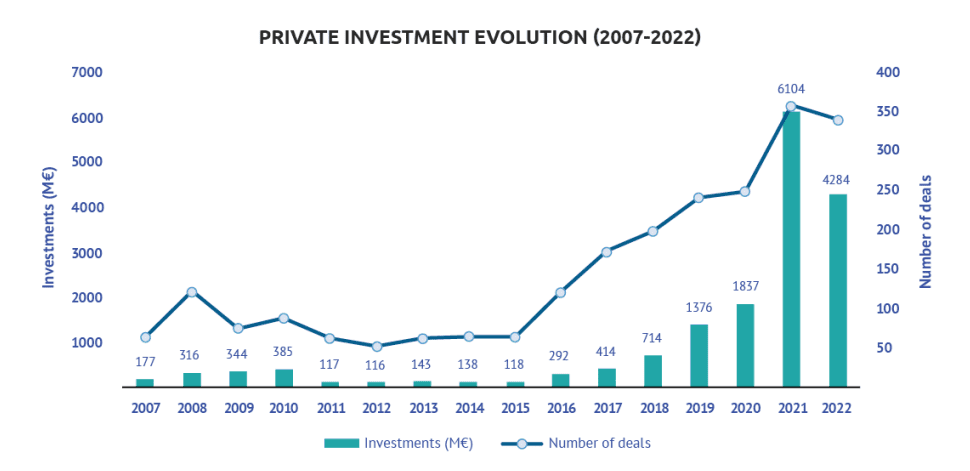
Overall investments in Nordic cleantech startups and scaleups have surged over the past years. According to the yearly Nordic Cleantech Dealflow Report (by Cleantech Scandinavia) investment levels are 10 times higher in 2022 than five years earlier in 2017. 2022 saw € 4,3 bn invested in 339 deals. The growth is clearly driven by energy and electrification. In 2019, energy and electrification of transport accounted for less than 34% of the total investments. In 2022 it was over 70%.

The portion of total deals that included pension funds it is still modest, a mere 11 out of 339 deals in 2022. However, it is up from 8 in 2021, 3 in 2020, 4 in 2019 and even fewer back in history. As indicated above the significance is in the amounts as pension funds were part of 34% of the deals in terms of amounts in 2022.

In 2022 and 2021 there were 14 Nordic pension funds that did direct investments into Nordic cleantech companies. Most active were:
AMF Pensionsförsäkring AB (SE), part of the AMF Group which manages over SEK 500 bn in equities, real estate and interest-bearing papers for approximately 4 million savers. AMF invested in Polarium, Exeger, Einride, Northvolt and Cake.

MP Pension (NO), formerly known as Tine Pension Fund. MP Pension invested in Auk, CO2 Capsol and Onio.

KLP (NO), Norway’s largest pension company with €65bn under management, made investments into Heimdall Power and Otovo.

PKA (DK), One of Denmark’s largest pension funds with 355,000 members and with DKK 400 bn under management. PKA invested in Norwegian battery company Morrow.

ATP (DK) is Denmark’s largest pension fund and one of the largest in Europe with 5,5 million members and DKK 679 bn under management. ATP invested in Northvolt and Better Energy.

AP 1-4 (SE), Swedish national pension funds. AP 1, 3 and 4 invested both separately and through a joint venture, 4 to 1 Investments KB together with AP 2 in Northvolt.

Other pension funds that made direct investments in Nordic cleantech in 2021 and 2022 were: Varma Pension Fund (Fi), LähiTapiola (Fi), Pension Denmark (DK), Akademikerpension (DK) and LD Fonde (DK).

This development says a great deal about the development of the cleantech sector. The frontrunners are of another breed than the ones that came before them, attracting scale up capital also from the most risk averse actors around.

As important as direct investments are, and hopefully this is a practice that will grow over the coming years, it is not the only way that pension funds contribute to the green transition. They also invest in other funds or even fund of funds into non-listed companies and they invest in infrastructure projects very often with a green profile. And of course, many of them consider their most significant impact is being an active owner role in stock listed companies. We will dig in to all these types of investments and come up on the other side with a big picture assessment on the role that pension funds have and can have in the green transition.

The role of Pension Funds in the Green Transition2025-01-28T10:49:12+01:00

Open letter to Swedish Minister for Climate and Environment

Open letter to Swedish Minister for Climate and Environment Romina Pourmokhtari

Minister for Climate and Environment Pourmokhtari,

Following the Climate Policy Council review of Swedish climate policy, We place ourselves at your disposal for dialogue in the development of the upcoming climate policy action plan.

The Council points to the synergy between climate and other societal goals. If we do not achieve the climate goals, it is more difficult to achieve all other societal goals. It is more difficult to achieve economic prosperity. It is more difficult to achieve a healthy Sweden. It is mentioned that the climate-neutral society can be just as good as the one we have now. We would just like to add… it can be better!

In this context, we propose to contribute to the development of a clearer, overall story about Sweden’s climate transition. We can contribute with clear examples of emerging sectors where Swedish companies with low carbon innovations are now growing rapidly and have globally leading positions in their respective areas. We can also help the government understand pain points these companies are facing on their journey to scale.

As pointed out on the council review, the upcoming climate action plan needs to clearly show how the EU Green Deal and the Fit for 55 package will be implemented in Sweden. Our partner organization, Cleantech for Europe, has been advocating for an ambitious Fit for 55 package that would strongly benefit Sweden, and would be happy to participate as well.

We hope to build a dialogue with your ministry on this topic and look forward to discussing in more detail.

With kind regards,

Alexander Lidgren and Magnus Agerström, Cleantech for Nordics a coalition of the most active investors in Nordic cleantech companies, seeking to closely engage with policymakers to ensure that the Nordic region becomes a global hotbed for cleantech innovation and growth.

Open letter to Swedish Minister for Climate and Environment2025-01-28T10:48:54+01:00

The Future’s So Bright, We Gotta Wear Shades

Carbon emissions refuse to go down and the way we manage biodiversity has been described by the UN Secretary-General as “committing suicide by proxy”.

So why the positive title? How can the future still seem bright despite the bad news? For starters, the Nordic countries have for decades been at the forefront of environmental action. Collectively, the Nordics have an impressive track record of citizen engagement, ambitious legislation and open and collaborative cleantech business and innovation ecosystems. In the 2022 European Innovation Scorecard, Sweden, Finland and Denmark were ranked 1st to 3rd respectively.

We have seen Denmark’s Vestas grow into the world’s largest manufacturer of wind turbines and a other strong growth journeys such as Norwegian solar companies REC and Scatec, and Swedish heat pump manufacturer NIBE take leadership on a global stage.

Investments in cleantech companies have surged over the last few years and are holding up well to the current pressure on financial markets. In 2022, 339 cleantech venture capital deals took place in the Nordics, totaling 4.3 Bn €.

Now, a whole new generation of Nordic cleantech companies are on the cusp of going global. These companies have benefited from the Nordics’ existing business and innovation ecosystems for cleantech. They also inherited its hard-won experience and cutting-edge infrastructure. Who are these next Nordic cleantech companies making the future so bright that its blinding?

Sweden’s electric transport industry has a stunning line-up of game-changing growth companies in e-bike manufacturer Cake, autonomous e-truck company Einride, eboat companies X-shore and Candela, and electric airplane manufacturer Heart Aerospace. All have international sales revenue growth and are at the international forefront of their field.

All 5 Nordic countries rank in the world top 10 for EV sales giving Electric Vehicle charging equipment and related software companies an astonishing proving ground in the Nordics and there is an armada now emerging, such as ChargeAmp of Sweden, Virta of Finland, Monta in Denmark and Zaptech and Amina out of Norway.

Northvolt is quickly turning into a giant in its own right, building battery factories in Sweden, Germany and Poland, having secured some 55 Bn€ in orders from customers like BMW and Volkswagen, and attracting 2.3 Bn€ from investors last year alone. Freyr as well as Morrow are also Nordic giga-scale battery factories in the making. There´s also innovation that can drastically reduce the negative environmental impact of batteries, such as Sweden’s Altris producing a sodium-ion cathode material, which can potentially replace both lithium and cobalt used in current lithium-ion batteries with more environmentally friendly sodium.

Finnish circular economy company Swappie, which has built two factories to refurbish iPhones and re-sell them, was at the top of the Financial Times’ recent list of Europe’s fastest-growing companies. Re:newcell of Sweden just started commercial operations at their newly built factory to recycle fabric from textile waste and is already getting orders H&M and Levi’s.
The legacy companies are not all on the sidelines either. Fortum is a Finnish energy company building a new battery material recycling facility. Swedish industrial giants SSAB, LKAB and Vattenfall have joined forces in Hybrit, working together to develop the first fossil-free steel. In parallel, start-up H2 Green Steel just secured €260 million in funding to develop a large-scale plant to produce steel with up to 95 percent lower carbon emissions than traditional steelmaking and has already signed contracts for 1.5 million tons a year of its low carbon steel.

Installing solar power is turning into a real Swedish stronghold through companies such as Alight and Svea Solar, the latter recently passing 100 M€ in revenue. Exeger is on the technology side and builds flexible thin solar cells that are integrated into devices such as remote controls and headphones, with Adidas as a recent notable customer. Epishine (Sweden) has also launched thin film solar, specifically for indoor light energy harvesting and now has pioneering customers integrating their tech into product lines.

These are far from the only areas where fast growing companies are emerging. We haven’t even touched upon biobased materials or low-carbon food production but here is the conclusion, and it has somehow gotten completely lost in the debate surrounding choices for our future:

Fast growing Nordic cleantech companies are emerging across a very wide spectra of sectors. Coming from a domestic market ahead of other markets they are now going global with strong and proven technologies.

This does not mean we can sit back and relax. As rightly pointed out by the Climate Change Performance Index (CCPI) – even if all countries were as committed as the current frontrunners, efforts would still be insufficient to prevent hazardous climate change.

What it does mean is that we can and should act from a position of confidence. Confidence to see high climate and biodiversity ambitions as an opportunity, not a threat. And to see our already strong position within the Nordics as an opportunity to accelerate further.

So how do we make the Nordics a powerhouse for cleantech innovation and growth, increase exports and avoid emissions globally?

We go global. Fast.

To achieve the potential of many of our cleantech innovations we need to improve global deployment of them. Part of this challenge is related to the workforce, in particular attracting skilled sales and marketing people as well as seasoned entrepreneurs with industrialization and internationalization experience. Rolemodels that have excelled at this from the get-go, such as Northvolt, Cake, Swappie, are plenty but so are the examples that have little understanding and/or capabilities in this regard.

If we increase our focus on this, we will find more ways to accelerate global growth.

We deploy more Nordic capital to scale-ups.

There is a need for investments that can support capital-intensive projects like building out new factories in the Nordics or scaling up to meet the growing global market demand for cleantech hardware. This kind of funding requires more specialized investors and networks who understand specific sectors, regions and technologies. Combining these requisites – late-stage funding, specific knowledge sets and networks – into late-stage Nordic cleantech funds could fill a critical role in the market. The Nordic co-operation would benefit from a combined Nordic approach and the different Nordic countries all have vehicles that could take part in it.

We increase Nordic co-operation.

The Nordic region offers an incredibly supportive and globally unique environment for cleantech growth. There is potential for increased cooperation across Nordic countries, sharing best practices, collaborating on outreach and coordinating the future energy system.

We address the shortage of skilled personnel in the cleantech sector.

Many fast-growing companies lack skilled workers to take their growth to the next level. This includes people who can assist in large-scale production at factories, deploy artificial intelligence or manage internationalization. To address this we need to include our education systems and it may include to facilitate work force import of skilled workers to the sector.

We plan and build our electricity system for abundance of renewables.

With a growing global demand for products with a low-carbon footprint, our competitiveness is strongly linked to our ability to produce renewable, reliable electricity in large quantities. As an example, LKABs transition to fossil-free iron alone will demand 55 TWh of electricity. This may sound like a lot, but it should be seen in the light that LKAB estimates carbon savings for customers corresponding to 2/3 of Sweden’s total carbon emissions. The Nordics are highly suitable to plan for and build an electricity system prepared for and incentivizing an abundance of renewable electricity.

The Nordic potential to create a number of new cleantech success stories has never been greater. Realizing their full potential will benefit all of us. Put on your shades and let’s do it.

Cleantech for Nordics

Alexander Lidgren, Cleantech for Nordics
Henri Isohanni, Helen Ventures
Peter Hirsch, 2150.vc
Markus Hökfelt, SEB Greentech VC
Jan-Olaf Willums, Inspire Invest
Tove Lilliestierna, Norrsken VC
Anders Kjær, PreSeed Ventures
Veronica Wänman, Baseload Capital
Fredrika Svanholm, Verdane
Ingvild Meland, Nysnø
Stefan Söderling, Almi Invest Greentech
Magnus Agerström, Cleantech for Nordics

Cleantech for Nordics is a coalition of investors and others looking to unlock growth in Nordic cleantech by closely engaging with policymakers.

The Future’s So Bright, We Gotta Wear Shades2025-01-28T10:48:37+01:00

Official Launch of Cleantech for Nordics

Launch of Cleantech for Nordics to help unlock the cleantech growth potential

Cleantech for Nordics was launched at Cleantech Capital Day in Oslo on October 25th.

Cleantech for Nordics is a coalition of investors and others seeking to closely engage with policymakers to ensure that the Nordic region becomes a global hotbed for cleantech innovation, jobs and economic growth. Our objective is to remove costly barriers and uncover new opportunities that can develop and grow the cleantech sector. Cleantech for Nordics aims to pioneer globally competitive industries that can slash carbon emissions, while also increasing energy security across the Nordics and Europe more broadly.

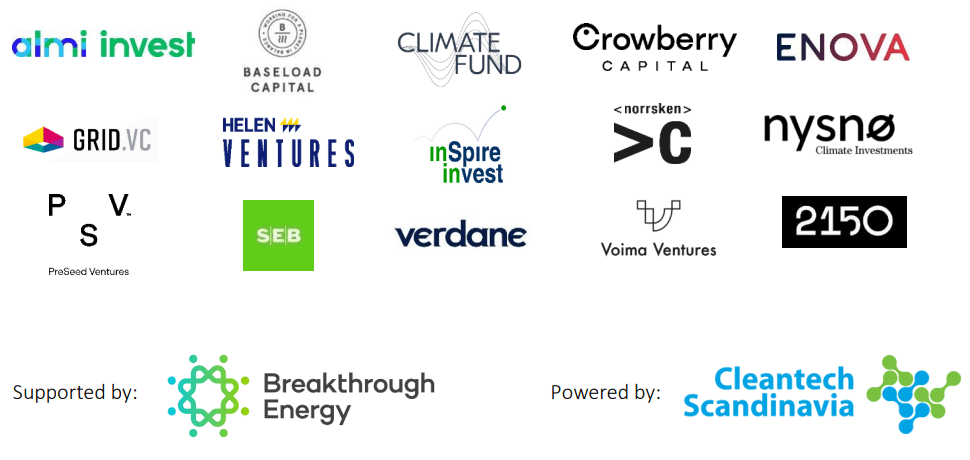
Cleantech for Nordics is supported by Breakthrough Energy and powered by Cleantech Scandinavia.

“The Nordics are among the most innovative economies and already punch above their weight in the cleantech space. The potential to create new success stories and scale up innovative solutions has never been greater, but will require more coordination between innovators, investors, corporates, and public decision makers in support of emerging clean energy solutions,” says Julia Reinaud, SeniorDirector at Breakthrough Energy.

Cleantech for Nordics is part of Cleantech for Europe, a European-wide network and initiative that aims to bridge the gap between cleantech leaders and policymakers.

“The Nordics are home to many of Europe’s cleantech pioneers, in sectors like batteries, electric vehicles or green steel. This new initiative will give a common voice to this promising ecosystem, and allow it to scale even faster,” says Jules Besnainou, Executive Director at Cleantech for Europe.

“With the coalition we are bringing 15 key players in the Nordics, on a mission to unlock the cleantech growth potential. We have high ambitions for the Cleantech ecosystem and hope to inspire other actors to join our initiative,” says Magnus Agerström, Managing Director at Cleantech Scandinavia.

Cleantech for Nordics is supported by Breakthrough Energy and powered by Cleantech Scandinavia.

Coalition Members
About Breakthrough Energy

Breakthrough Energy was founded by Bill Gates in 2015 to accelerate the clean energy transition and help the world reach net-zero emissions by 2050. Through investment vehicles, philanthropic programs, policy advocacy and other activities, Breakthrough Energy is committed to scaling the technologies the world needs to meet its climate goals.

About Cleantech for Europe

Launched in 2021, Cleantech for Europe represents the trailblazers developing, deploying and investing in clean technologies across the EU. Our mission is to make cleantech a strategic priority in the EU, by bridging the gap between cleantech and policy leaders. The initiative equips policymakers with insights about cleantech and builds coalitions to chart a new path for the continent.

About Cleantech Scandinavia

For 15 years Cleantech Scandinavia has been a trusted source of cleantech-related investment opportunities, business intelligence and investment statistics in the Nordics. Our exclusive platform of Nordic and Baltic cleantech companies offers a unique opportunity for our international community network of investors, industrials, real estate companies, cities, service providers and the public sector.

Official Launch of Cleantech for Nordics2026-01-03T21:52:29+01:00

Cleantech Scandinavia to help build €150m cleantech investment pipeline with EU support

Cleantech Scandinavia has joined 12 organisations in the BRAVE partnership, which is building seven flagship regional investment ecosystems for cleantech across Europe with support from the European Union.

Business Readiness Acceleration for Innovative Regional Energy Ecosystems (BRAVE) will develop scalable investment programmes for low-carbon energy systems. From electrified public transport fleets to residential heat pump schemes, it aims to break out of the ‘pilot trap’ for cleantech at the local level. With funding from the European Union’s Interreg North Sea programme, BRAVE aims to mobilise a combined €150m of new investment into local energy systems to find scalable public-private approaches.

Addressing the regional investment gap for cleantech in Europe

The European Union requires an estimated boost of €700bn per year in clean, smart, local energy systems to deliver on the energy transition. For this to happen, investment is needed for energy projects of all sizes and maturity stages, from early-stage demonstrations to full-scale deployment across Europe.

But though the EU is increasing its share of global cleantech investment, an investment “valley of death” at regional level remains a stubborn challenge. Between one-off pilot demonstrators and large-scale renewable investment projects such as off-shore wind parks, there is limited financial support or demonstrated partnership models for scaling mid-stage projects across Europe.

Cleantech investments with ticket sizes of €10-100m are failing to attract capital beyond public subsidies. This leaves technologically mature innovations stuck in the ‘pilot trap’, unable to scale to regional or city level.

BRAVE brings together 13 frontrunners to build new regional investment ecosystems

Backed by the European Union, 13 organisations have formed the BRAVE partnership to develop seven regional public-private investment ecosystems across Northern Europe to break out of the cleantech pilot trap. Partners will trial new ways to scale cleantech solutions – with a focus on increasing ‘business readiness’ in the Netherlands, Belgium, Denmark, France, Sweden, and Germany.

In the next four years, BRAVE partners have committed to:

  • Deliver seven regional ecosystems in diverse energy domains, including low-carbon public mobility, residential solar, energy communities and industrial hydrogen hubs
  • Mobilise a combined €150m in regional energy investments, crowding in public and private finance into the ‘missing middle’ of energy finance
  • Develop replicable business models and public-private partnership frameworks to accelerate cleantech uptake across Europe

Supported by professional finance experts, BRAVE partners will define their scale-up challenges, identify effective models for public-private partnerships, and design novel business and investment models between public authorities and private energy investors that can de-risk in Europe’s local energy sector.

Cleantech Scandinavia will connect a network of infrastructure and other investors to the partners’ scale-up challenges, bringing market validation to the business and investment models being explored in the BRAVE partnership.

Meet the BRAVE partnership

BRAVE unites local public authorities, regional business support organisations, the cleantech private sector, and applied research to develop replicable business and partnership models for cleantech ecosystems:

  • City of Rotterdam, BRAVE Lead Partner, will expand on its existing flagship regional start-up subsidy programme with €10m of new investment, supported by local investment organisations including InnovationQuarter and ICOS Capital.
  • French cluster organisation Pôle MEDEE and sustainable transition accelerator CD2E will roll out replicable investment models for the City of Amiens’ €130m low-carbon (EV and biodiesel) public bus fleet.
  • The Swedish City of Malmö will work with social housing developers to identify business models to scale-up around €5m of investment in smart local energy systems.
  • Dutch business support organisation BOM will identify the business and market conditions required to crowd in €30m new investment to scale up an industrial hydrogen hub in Brabant, the Netherlands.
  • Flanders cluster organisation Flux50 will work with the City of Antwerp and local ESCOs to build a €2m investment case for residential heat pumps for low-income homes.
  • Hamburg’s business development agency Hamburg Invest plans to connect its Scaleup Landing Pad programme to the next generation of investment for scaling GreenTech solutions.
  • The City of Aarhus in Denmark will combine private loans with public guarantees to leverage €13m in new investment for 70,000m2 of municipal rooftop solar.

The seven regional ecosystems will receive commercial development expertise from:

  • Cluster organisations Cambridge Cleantech International and Cleantech Scandinavia, which bring a network of hundreds of clean energy investors and practitioners to ensure BRAVE’s results are spread across Europe.
  • Erasmus Center for Entrepreneurship, which will provide academic entrepreneurship expertise to the project, ensuring BRAVE’s results serve SMEs while measuring pilot effectiveness.
  • The University of South-Eastern Norway, which will support the development of investment cases within BRAVE, producing investment model templates for future uptake across Europe
  • Mobility and logistics consultancy LNC will support the partnership with insights and expertise for cleantech scaleup in Germany

Learn more or get involved in BRAVE

Want to learn more about BRAVE’s investment ecosystems and how you can get involved? Contact: contact@braveenergy.eu.


BRAVE is an Interreg North Sea project co-funded by the European Union.

Project start: July 2024

Cleantech Scandinavia to help build €150m cleantech investment pipeline with EU support2026-01-03T21:34:08+01:00

Investment Accelerator: Swedish Scaleup companies

Cleantech Scandinavia has the honour of supporting the Investment Accelerator program, that aims to help companies improve their investment readiness in their process of approaching and connecting to international investors. The program started in 2023, with a 1st batch of companies and in 2024 has selected a 2nd batch of Swedish Scale up companies. Meet them here!

First round of the programme

The companies accepted to the first round of the programme have solutions ranging from new technologies for packaging and wave energy systems to wind turbines made of wood and cutting-edge energy storage.

Candela

Candela’s electric boats use 90 percent less energy than conventional boats, thanks to a new hydrofoil technology, which enables fast fossil-free sea voyages at very low cost. The hydrofoil technology produces no swell and reduces seasickness.

Candela

CorPower Ocean AB

CorPower Ocean provides highly efficient wave energy technology which enable reliable and cost-effective harvesting of electricity from ocean waves. Their innovation is inspired by the pumping principle of the human heart. Ocean wave energy brings stability to the clean energy mix, accelerating the transition to carbon-free energy.

CorPower Ocean AB

Epishine AB

Epishine offers a smarter way to power electronics. The technology harvests ordinary indoor light to power small electronics, making disposable battery cables and unnecessary maintenance a thing of the past.

The large-scale energy solutions of the future will be printed. With scalable production of thin, flexible, easy-to-handle solar cells, any surface which is touched by light, will be able to harvest energy.

Epishine AB

Ligna Energy AB

Ligna Energy develops, manufactures, and markets unique sustainable energy storage devices – a key factor for sustainable products and a sustainable energy system. The focus is on self-sufficient electronics.

The product S-power is adapted as an intermediate storage of energy which is harvested from sources such as light or radio waves.This means that primary batteries or rechargeable lithium batteries are no longer needed. Ligna Energy’s technology is based on automated “roll-to-roll” manufacturing with accessible materials, which means that production can be carried out profitably in Sweden.

Ligna Energy AB

Modvion AB

Modvion develops wind turbine towers made from laminated wood – nature’s carbon fibre. Wooden structures enable radical emission reductions by replacing emission-heavy materials such as steel and concrete. Thanks to their patented modular system, Modvion has been able to develop cost-effective wind turbine towers and more efficient transport for high-rise tower installations.

Modvion AB

Orbital Systems

Orbital is an award-winning water technology company, founded in 2012 after a collaborative project between NASA and Lund University. Orbital is leading a paradigm shift regarding daily water use, which accounts for a large part of energy consumption in society.

Through their product portfolio, Orbital enables significant water and energy savings while providing a first-class user experience. The company’s 150 patents and patent applications have a large market potential worldwide.

Orbital Systems

Raymond Solar AB

Raymonds is a fast-growing innovative company that has developed the world-leading, patent-pending, award-winning Smart Solar Roof which is revolutionising three industries:

  • The solar industry – from unaesthetic surface-mounted photovoltaics to aesthetic high-efficiency (233W/m2 vs Tesla 143W/m2) photovoltaic roofs in any colour.
  • Roofing industry – from expensive concrete tile roofs with high CO2 impact, to self-sufficient photovoltaic roofs with 85 percent lower CO2 footprint.
  • Installation industry – from manual time-consuming (1-2 weeks) photovoltaic installations with heavy lifting and poor working environment to factory-made photovoltaic roofs to be installed in one day.

Raymond Solar AB

Yangi AB

Yangi develops and offers a breakthrough technology for cellulose-based packaging, enabling the replacement of rigid plastic packaging on a large scale. With its unique technology and the recently launched industrial production platform Cellera, Yangi addresses the urgent need of brand owners and packaging producers for more sustainable packaging solutions. Yangi’s technology enables resource-efficient production with significantly shorter cycle times.

Yangi AB

Companies admitted in 2024

The companies admitted to the programme have solutions ranging from electric scooters to virtual batteries and fossil-free silicon.

Capture Energy

Capture Energy is an energy storage solutions company dedicated to bringing good energy to your business. We specialise in end-to-end turnkey energy storage solutions, enabling forward-thinking customers to benefit from opportunities in the flexibility market rapidly, safely, and sustainably.

We focus on partnerships with installers and energy companies that focus on the green transition and implement energy solutions integrated with market-leading aggregators that ensure revenue generation. We have integrated our battery energy storage system (BESS) with more than 10 aggregators with our unique Capture Controller technology.

Established in 2023, turnover more than 10 MEUR. Offices in Sweden, Denmark and Norway. We have multiple MW BESS active in flexibility services in the Nordics and soon in Germany.

Capture Energy

Cirkulär

Cirkulär constructs, owns, and operates large fermentation facilities that refine low-value by-products from the forestry industry into high-value, sustainable raw materials (e.g., proteins, fibers and biopolymers) through filamentous fungi. In this manner, we contribute to the green transition across various industries, e.g. feed, food, functional nutrition, and materials. Currently, we are raising capital to build our first commercial facility at a paper mill, which supplies us with its by-product, to produce thousands of tons of sustainable fungal protein as an ingredient in animal feed.

Cirkulär

Emulate Energy

Emulate Energy is a Software-as-a-Service (SaaS) company founded in 2020 with the goal of accelerating the transition to 100 percent renewable energy in society. One challenge is to store energy on a large scale, and we have developed software that creates large virtual batteries based on flexible electrical loads such as electric cars and heat pumps.

Our customers are electricity retailers, and besides supporting the transition by stabilizing and optimizing utilization of the electricity system, our solution enables consumers to reduce their electricity costs and monetize on the flexible loads.

We are scaling fast across Europe and US and look for funding to capitalize on a large opportunity.

Emulate Energy

GREEN 14

GREEN14 is a Stockholm-based company specializing in advanced metallurgy that utilizes hydrogen plasma to re-establish the manufacturing of high-purity silicon in Europe. Currently, the strategic raw material supply chains are long and vulnerable, including those for silicon, which is critical for the green transition. Through the use of hydrogen plasma, GREEN14 enables modular production of polysilicon and silane gas for use in semiconductors, solar panels, and battery anodes. The technology can also be applied to other key metals such as aluminum, cobalt, magnesium, titanium and chromium. This innovative technology and development platform accelerates processes, reduces costs, and cuts emissions by up to 95 percent.

Green 14

T.Loop

T.Loop is a Swedish data center operator with an innovative circular concept that eliminates 100 percent of CO2 emissions and reduces energy costs by 30 percentfor the company’s customers. The company builds climate-smart data centers in existing buildings and uses liquid cooling for the servers in the data center.

100 percent of the residual heat from the data center is used to heat the building the data center is located in, nearby buildings, or is transferred to the district heating network. The data center’s reserve capacity is used for grid balancing and reducing peak loads to strengthen the energy network.

With its solution, T.Loop aims to eliminate the climate impact from data centers and transform them into an energy solution in the green digital transition.

T.Loop

Vidde mobility

Traditional fossil snowmobiles, known for their environmental impact and noise, inspired us to create an electric, sustainable alternative. Vidde is leading the transformation of terrain vehicles from emission-heavy to sustainable, valuing the environment and embracing a noise-free experience.

Primary customers are companies that are using terrain vehicles as part of their daily operations and that have a sustainable ambition, examples are companies within forestry, ski resorts, power companies or winter tourism.

Vidde Mobility

Standab

Standab develops and offers parking solutions for more efficient integration of micromobility in cities, focusing on sustainable, scalable, and user-friendly charging infrastructure for e-scooters and e-bikes. Standab’s goal is to bridge the gap between cities and micromobility-operators with service-funded parking solutions, which significantly reduce costly battery-swaps and provide both cities and operators access to designated parking for more efficient integration into the urban environment.

Standab’s technology, designed for smooth integration and installation, offers cities and a clear majority of Europe’s micromobility-operators modular, versatile, and future-proof charging stations, optimally designed to also meet the needs of the private market in the future.

Standab

A Swedish Energy Agency Program Powered by Cleantech Scandinavia

Investment Accelerator programme

The aim of the programme is to match Swedish growth companies with foreign investors. The Swedish companies will develop expertise in what foreign investors need, and the foreign investors in what Swedish companies can offer.

The Swedish Energy Agency is tasked with promoting investment to strengthen Swedish growth and create new jobs. We support business development, commercialisation, and export of Swedish cleantech innovations to accelerate global green transition.

Investment Accelerator: Swedish Scaleup companies2026-01-03T21:59:42+01:00

So this is it: here are the 12th Edition Winners!

WINNERS ARE ANNOUNCED

📣📣 Exciting News 📣📣

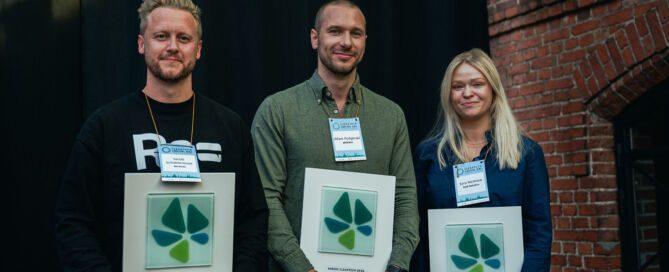
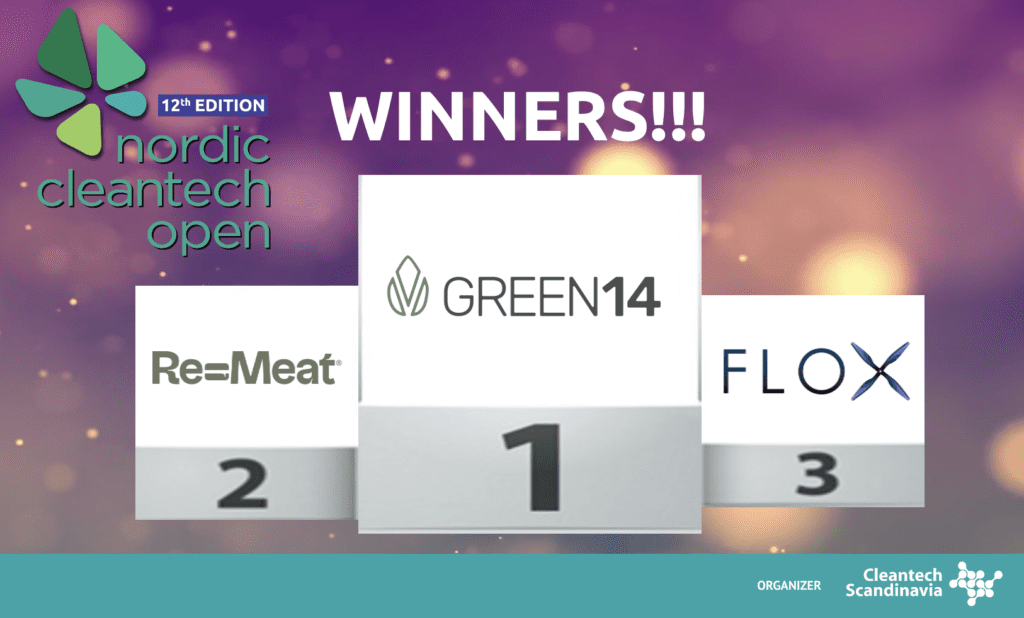
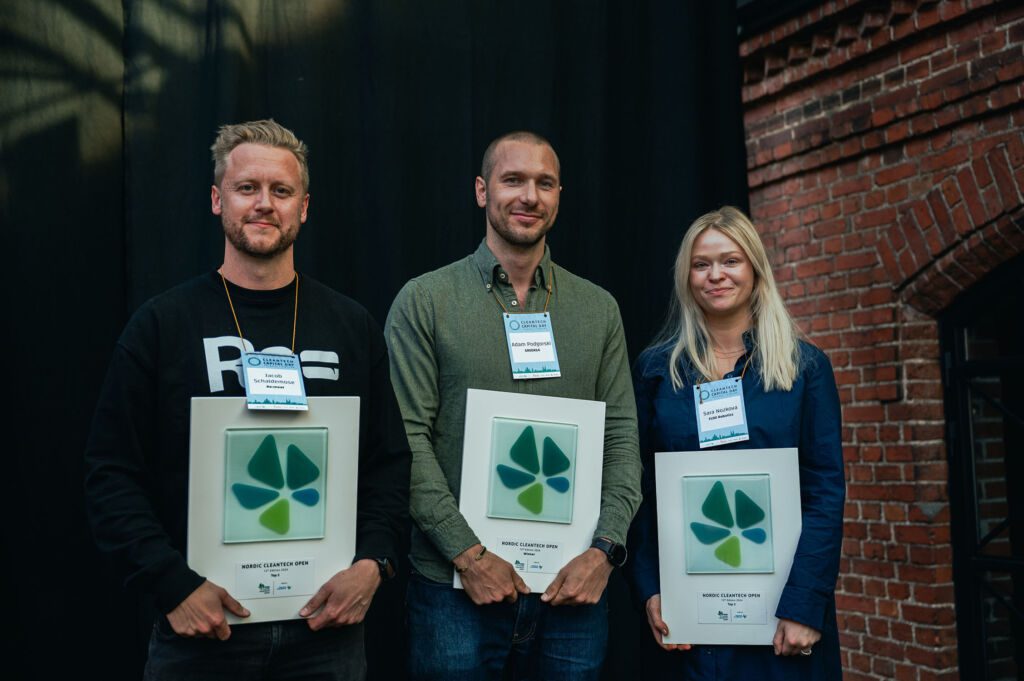
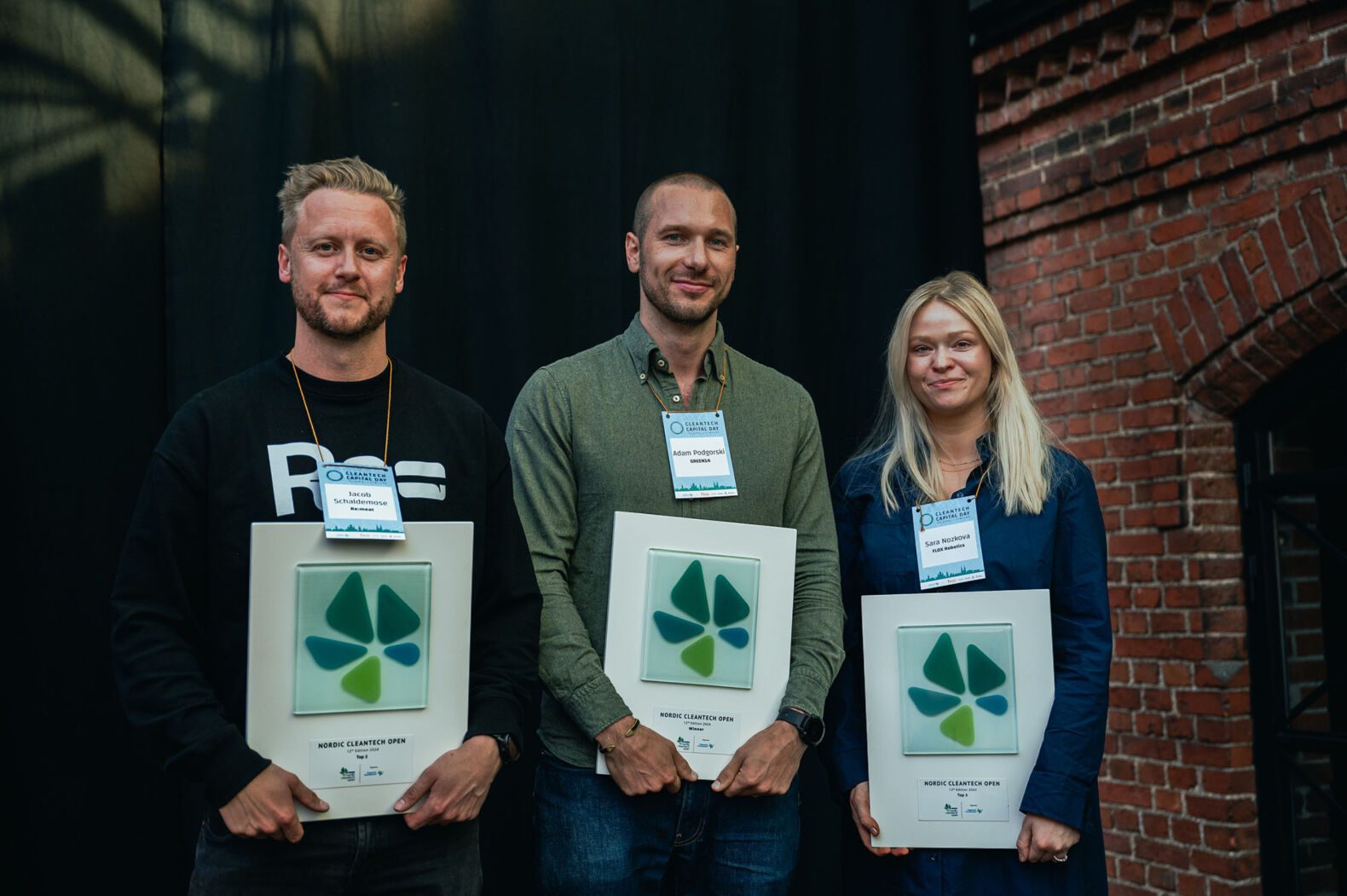
So this is it! We’re thrilled to announce the TOP 3 of the 12th Nordic Cleantech Open! The Top 10 companies that made to the Finals pitched last week in Helsinki and the audience has spoken! Here they are:

🥇 Winner: GREEN14

🌍 Stockholm-based GREEN14 is transforming raw material value chains with their focus on silicon materials for the green transition. Using hydrogen plasma, their tech reduces costs, speeds up processing, cuts emissions by 95% and only outputs water vapor.💡🌱 Read more about them here: https://www.green14.com/

🥈 Top 2: Re:meat

🍖 Re:meat redefines meat production. Instead of changing what’s on our plates, they work on how meat gets there. Based on cells donated by a cow still grazing the green fields of a Swedish climate-certified farm, Re:meat cultivates meat in a brewery-like environment. And they achieve this with 92% less climate impact. 🚀🌿 Read more about them here: https://www.remeatfoods.com/

🥉 Top 3: FLOX Robotics

🦊 FLOX Robotics envisions a world where humans and wildlife coexist. Their Wildlife Management as a Service (WMaaS) tech keeps wild animals away from populated areas, promoting safer ecosystems. 🌳🤖 Read more about them here: https://floxrobotics.com/

👏 Congratulations to all participants! 👏 👏 And thanks for the amazing jury that ran through all the 133 applicants, the Nordic Camp and all the work that led us here to GREEN14, Re:meat and FLOX Robotics

These three, the winners, are a shiny representation of our greater cleantech ecosystem, created by hundreds, nay, thousands of professionals fully committed to a sustainable and innovative future. 

Let’s celebrate and support every journey we can! Cheers! 🎉🌟

#InnovationAwards #Sustainability #TechInnovation #GreenTransition #FutureOfMeat #WildlifeManagement #Startups #SustainableTech #Decarbonization

So this is it: here are the 12th Edition Winners!2026-01-03T21:50:20+01:00

Meet the TOP 10 selected companies of the 12th Nordic Cleantech Open

What a Batch!

TOP 10: Here they are!

ORGANIZER

Lund, April 15th, 2024 – We are delighted to announce the Top 10 companies of the 12th edition of the Nordic Cleantech Open.

Over the past 12 years, the Nordic Cleantech Open competition has served as a beacon, illuminating emerging cleantech trends towards a low-carbon reality. This year’s edition received 133 applications from across the Nordics and the Baltics, each one shaping the future in its own way. 

We extend our congratulations to all 133 participants, including the Top 25, whose inspiring presentations at the Nordic Camp made a significant impact.

Held at the gorgeous Smygehus Havsbad hotel, the Nordic Camp provided a platform for these companies to pitch and present their cases to our esteemed jury panel, consisting of 70 professionals from various sectors — including industry, venture capital, public funding, and regional development. 

So far, the Nordic Cleantech Open jury has cast 7,566 votes on written applications and 367 votes on pitch presentations, providing valuable feedback to each company. A  rigorous process was followed, involving thorough reviews of all written applications and live presentations at the Nordic Camp. Ultimately, the top 10 companies were selected based on their exceptional innovation, vision, and readiness to scale. Here they are:

THE FINALS

The journey continues as the Top 10 companies prepare to deliver their final presentations at the 12th Nordic Cleantech Open Finals & Cleantech Capital Day, on May 14-15, in Helsinki – Finland.

We extend an invitation to all to join us.

This is our flagship event and you are invited to join us in celebrating these remarkable entrepreneurs at the Cleantech Capital Day. The event will feature the competition finals, engaging discussions on topics related to climate neutrality and company presentations. 

In collaboration with Tesi, Nasdaq, Taaleri and Climate Point, and with an anticipated attendance of more than 200 participants from Europe, China, Middle East and North America, this event is a gathering of key players driving cleantech innovation forward.

And you can be a part of it.

ORGANIZER
SUPPORTING PARTNERS
ORGANIZER
SUPPORTING PARTNERS

EcoUp Oyj

EcoUp Oyj is a circular economy group. It promotes demolition waste recycling, urban mining and low-carbon construction.

FLOX Robotics

FLOX Robotics reimagines landscapes where humans and wildlife thrive together, transforming human-wildlife conflicts into coexistence.

Fusebox OÜ

Fusebox’s cutting-edge software bridges the gap between electricity consumers, producers, storage systems, and energy markets.

GREEN 14 AB

GREEN14 uses hydrogen plasma to enable the modular production of components for semiconductors, solar panels and electric vehicle batteries.
HEJMAS Agrifibre Technology AB

Hejmas Agrifibre Technologies AB makes the highest grade pulp from agricultural crop waste, instead of trees.

Over Easy Solar

Over Easy Solar makes the urban rooftop solar photovoltaic units, designed for buildings that are not suitable for conventional solar panels.
Re:Meat AB

Re:meat’s mission is to redefine how meat ends up on people’s plates. Same meat. New technology. 92% less climate impact.
Remoted

REMOTED is an urban mobility venture that operates shared, electric, self-driving shuttles and buses.

Reselo AB

Reselo makes a substitute for rubber out of residue from the forest industry, to be used in applications within footwear, tires and automotive.

Roofit Solar Energy OÜ

Roofit.Solar specializes in solar roofs to deliver a durable energy solution for homes and heritage buildings, combining aesthetics with functionality.

Download this editions’ Top 25 Report!

Please fill out the form in order to download:

"*" indicates required fields

This field is for validation purposes and should be left unchanged.
Name*
Corporate Email (gmail, hotmail and such are not accepted)*

Meet the TOP 10 selected companies of the 12th Nordic Cleantech Open2026-01-03T22:19:49+01:00
Go to Top